I recently attended a brilliant I-Tell session led by Emily Atkinson, Subject Leader of Social Sciences at a secondary school in Warwickshire. Emily offered a fascinating window into the assessment experiences of students before they arrive in Higher Education.
One such practice was cold calling, a teaching approach I used routinely and championed in my secondary days. I still do it now, although probably less frequently in HE. There seems to be a reluctance to put students on the spot. However, when done thoughtfully, cold calling isn’t about catching people out. It is about including everyone. It creates shared accountability for learning and ensures all voices are valued, not just the confident few who always volunteer.
It was refreshing to hear insights from someone with a background similar to mine. Before moving into HE, I spent nearly 20 years in secondary schools, taking on roles such as Head of Department and Head of Year. Much of what Emily described felt very familiar and yet it raised some good questions about how our classroom practices evolve (or get left behind) when we change sectors.
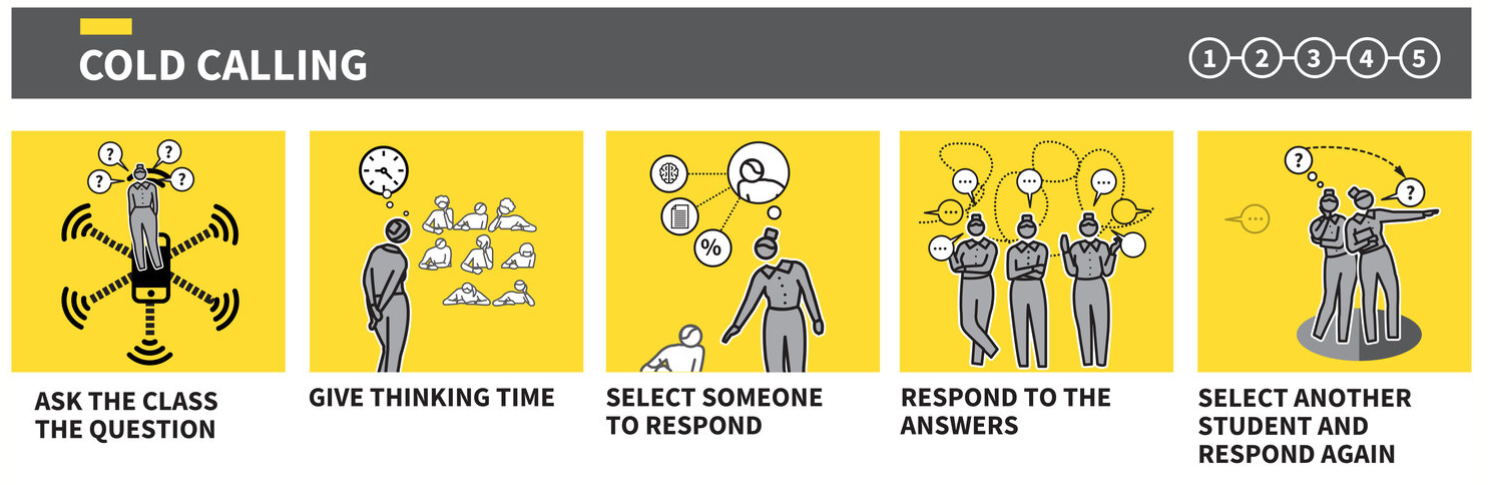
Tom Sherrington’s blog post Cold Calling: The #1 Strategy for Inclusive Classrooms – Remote and In-Person offers a clear and practical explanation of the approach. He argues that cold calling is not about pressure or performance. It is about building a culture where every student is expected to think and contribute. This is proactive inclusion. Rather than waiting for volunteers, it brings everyone into the learning conversation. Sherrington highlights how cold calling:
- Provides thinking time before asking for responses, so it feels fair
- Encourages students to be mentally prepared, knowing they might be called on
- Builds a sense of community where everyone is expected to engage
- Normalises participation and reduces anxiety by making it routine
It is a subtle shift. Instead of asking who knows the answer?, we say let’s hear from you next. That small change can have a big impact on classroom dynamics.
So, to my HE colleagues: Do you cold call?
And to our students: Was this something you experienced in school? How did it feel?
I’d love to know what you think.
 Creative Futures Innovation Toolkit
Leave a comment